
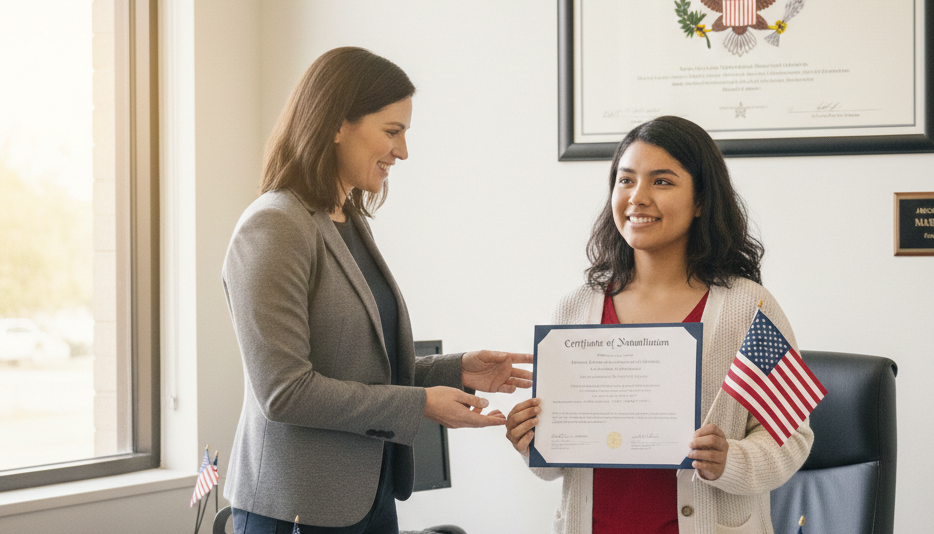
Naturalization / Citizenship
Obtaining United States citizenship is much more than a legal procedure; it is about achieving total stability, protecting your family, and securing your future in this country. As an immigration attorney, my mission is to guide you with precision through this complex process to avoid errors that could delay or jeopardize your application.
Requirements for Naturalization (Form 400):
To qualify, you must generally meet the following points:
- Minimum Age: Be at least 18 years old at the time of filing the application.
- Permanent Residency: Hold a Green Card for at least 5 years (or 3 years if married to a United States citizen).
- Physical Presence: Have been physically present in the United States for at least half of the required time (30 months for the 5 year rule; 18 months for the 3 year rule).
- Continuous Residence: Not have taken trips outside the country for more than 6 months, as this may interrupt your eligibility period.
- Good Moral Character: USCIS reviews criminal records, tax compliance, and truthfulness in previous applications.
- Civic Knowledge and Language: Pass a United States history and government exam, in addition to demonstrating a basic level of English (there are exceptions for age or disability).
Frequently Asked Questions (FAQ)
Can I become a citizen if I do not speak perfect English?
There are exceptions (the 50/20, 55/15, and 65/20 rules) for older individuals who have been residents for many years. There are also medical waivers (N-648) for cognitive disabilities.
What happens if my Green Card is expired?
While renewing it is recommended, in many cases you can begin your naturalization process while the renewal application is pending.
Do I have to renounce my original nationality?
The United States allows dual citizenship. You can keep your current passport and obtain a United States passport.